Southeast Asia’s haze keeps returning because fire pays

Once more, yellow-grey smoke smelling of burnt peat settles over Southeast Asia. This October, Kuala Lumpur’s Air Pollutant Index climbed past 160 while Singapore’s 24-hour Pollutant Standards Index reached a very unhealthy 230.
Then comes the anger. Social media fills with demands that Indonesia put out its fires. The 2015 haze, according to Harvard and Columbia researchers, may have caused more than 100,000 premature deaths across the region. The World Bank puts Indonesia’s economic losses that year at US$16.1 billion.
As tempers rise, so does the finger-pointing at the companies behind the fires. WALHI, an Indonesian environmental group, has traced the parent groups of concessions with hotspots this year. Its study ties 66 companies to Singapore-based groups and 27 to Malaysian ones, although their Indonesian operations remain subject to Indonesian law.
Yet a hotspot inside a plantation boundary does not establish who lit the fire. Singapore’s Transboundary Haze Pollution Act tries to bridge that gap with legal presumptions based on maps and satellite evidence. Investigators still face conflicting concession maps and limited site access. Since the law was passed in 2014, no prosecution or civil action has followed. With the worsening haze, Singapore has just issued preventive notices to ten companies. Malaysia abandoned a similar proposal in 2023, citing evidentiary difficulties, but is now reconsidering.
Indonesians share the frustration. This month, youth commentator Abigail Limuria apologised to her neighbours for the smoke. She ran through the grim calendar of fires: 1997, 2006, 2013, 2015, 2019 and now 2026, and pointed to the bureaucratic inertia that persists. By October 2, West Kalimantan had spent less than 18% of about US$13 million in presidential emergency fire aid.
Understanding the economics of burning is key, and researchers in Indonesia have long followed the money. Around 2016, Professor Herry Purnomo of Institut Pertanian Bogor (IPB) found that clearing a hectare by fire in Riau costs about US$15. Once cleared and locally documented, the land can fetch about US$650, rising to roughly US$3,000 after three years under oil palm. Fire is how land gets made in Riau.
His later research linked spikes in burning to district election cycles, when land permits acquire political value. The networks behind the fires often include brokers and local elites.
Dr Bambang Hero Saharjo, who has testified in over 500 cases, knows how dangerous proving wrongdoing can be. His evidence helped secure a judgment of roughly US$30 million against the planter PT Jatim Jaya Perkasa. The company then sued him twice, seeking more than the fine it had been ordered to pay, before dropping both cases.
Addressing Indonesia’s fire problem depends as much on policy intention as on capacity. The country has no shortage of science, yet enforcement is entangled with local power structures. At regency and provincial levels, where land is allocated, patronage networks can reward burning and frustrate accountability.
At the heart of the fire ecology lies drained peat. Naturally waterlogged and fire-resistant, peatlands become underground fuel beds once cut by drainage canals. Fires can then smoulder below the surface, beyond the reach of aerial water bombing.
Government land-use policies have compounded the problem. After the 2015 fires, former President Joko Widodo pledged to restore peatlands even as land-opening projects continued. Recently in Merauke, South Papua, WALHI identified 807 hotspots in a state-backed food and energy estate, 674 of them in four clusters run by government ministries.
Political scientist Michael Howlett calls this policy “layering”, in which new measures pile onto old ones without resolving their contradictions. ASEAN’s haze agreement, Singapore’s law, Indonesia’s forest moratorium and successive peat agencies accumulated while land-opening programmes undermined fire bans. Nearly three decades of diplomacy have left these conflicting incentives intact.
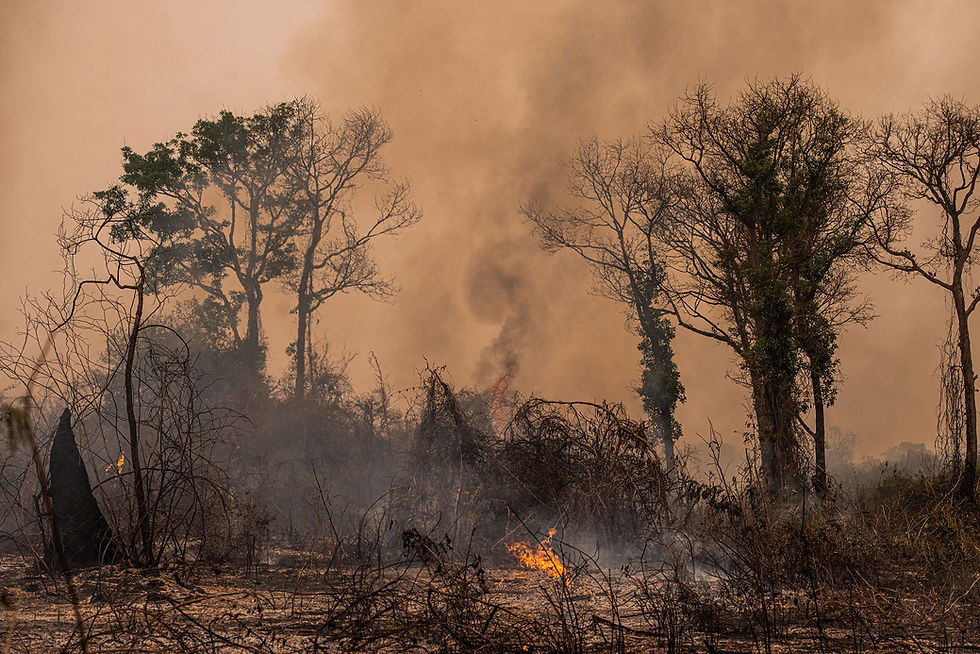
The alternative is policy “patching”, targeted repairs that make existing policies work together. The largest patch falls to Indonesia, because the reward begins with land. In September, officials sealed a fire site in Ketapang, Kalimantan where oil palm was planted soon after the flames died.
As long as burned peat commands a premium, fire bans will struggle. Moving forward, illegally burned land should be barred from certification, sale and planting, with safeguards for legitimate landholders.
Rewetting the peatland should pay. The World Bank estimated restoration at about US$1,000 a hectare. At that indicative rate, 2 million hectares would cost roughly US$2 billion, a fraction of what Indonesia lost in 2015.
Singapore holds the next lever. SGX RegCo has begun seeking information from seven listed agricultural companies. With the Monetary Authority of Singapore, it should turn those inquiries into disclosure rules. Listed plantation and pulp firms should report hotspots, burned area and corrective action across their subsidiaries and concessions.
These companies should also help finance restoration where they operate. Verified peat restoration credits could direct private capital towards keeping peat wet. Bursa Malaysia should adopt a comparable rule, so firms face the same scrutiny in both markets.
The last patch needs all three countries. Indonesia should reconcile and publish verified concession maps, with all three funding legal protection for expert witnesses. Fire cases will inevitably stall while land control remains opaque and witnesses risk being sued.
Rain is expected in some fire-affected areas from mid-November. The skies will clear and the anger will fade, as they did after 2015 and 2019. The next El Niño will come with ample warning. Unless restored peat becomes more valuable than burned peat, the smoke will arrive on schedule.
Dr Hezri Adnan is an environmental policy researcher and a fellow of the Academy of Sciences Malaysia. He served on the UN Environment Programme’s International Resource Panel from 2015 to 2018.


Comments