The Ecological Meaning of Merdeka

Updated: Sep 17
Every 31 August, the flags go up and Malaysia remembers the day the rakyat took back the right to rule themselves. In 1957, a people once governed from London began to shape their homeland’s future. The Constitution of the Federation of Malaya gave that self-rule durable form through citizenship, personal liberty, elected institutions and divided powers. Six years later, the Malaysia Act 1963 reshaped the constitutional order for a larger federation.
Read them again today, and you hit a silence. The word ‘environment’ does not appear. The framers built a nation without saying what kind of ground it stood on, or in what natural world its freedoms would be exercised. The Constitution recognises no express right to a clean and healthy environment and owes nothing to the generations still unborn.
This omission is historically understandable. Constitutions, as legal scholar Shad Saleem Faruqi observes, are written in ‘glittering generalities’ that cannot foresee what posterity will face. The struggles of the 1950s and early 1960s were about independence, communal accommodation, security and development. Nature entered the argument as territory and revenue.
Then the climate changed, and with it the conditions under which any freedom has to survive. A living constitution has to answer to the ecological limits now pressing on national life.
The gap is one of principle. Nature does enter the document, but only in fragments, as items to be parcelled out under the Ninth Schedule.
Land, agriculture, forests, local government and most water matters belong to the states. Wildlife, national parks, town planning, public health, sanitation, drainage and irrigation are shared responsibilities. The 1963 settlement gave Sabahand Sarawak their own safeguards inside that division, particularly over land, forests, rivers and native law.
So the Constitution catalogues nature as an object of government. It says who has power over what, and never why that power should be used.
The result shows up on any wet afternoon. The Klang River does not stop at the boundary between Selangor and Kuala Lumpur. A flash flood joins in minutes what our planning keeps apart, forests and drains and housing and roads, each of them somebody else’s file. Which agency owns a flood?
The choking haze over Malaysia this week travels without a passport. Climate change ties energy policy made at the centre to land decisions made in the states, and both to the heat felt in a kampung or city apartment. Fragmented powers leave every agency holding a piece and no one answerable for the whole.
What the legal text lacks, our national language already carries. Merdeka names the freedom. Tanah air names the ground beneath it – land and water, bound to a people. We have had a vocabulary of ecological nationhood all along and have never read it as law. To care for the tanah air is patriotism, a loyalty expressed through stewardship and repair.
Our understanding of Merdeka should therefore expand. Freedom over territory has to become responsibility within it, and the constitutional order has to accept that a habitable environment is inseparable from the right to life. This is no longer a thought experiment.
In the recent #ManaHutanKami case, six young Malaysians have applied for judicial review, arguing that failures to curb deforestation breach their rights to life and equality under Articles 5(1) and 8(1). They also invoke legitimate expectation and the public trust doctrine.
The court has yet to rule. That they must argue from a right the text only implies is itself the problem. The law is trailing the country it governs. It is trailing its peers as well. More than 100 countries now write a right to a healthy environment into their constitutions. Malaysia does not.
An express right to a clean, healthy and sustainable environment would give legal form to a national instinct for self-preservation. It would hand Parliament, the state assemblies, administrators and the courts one standard to work to. The right should carry duties with it, of prevention, of public participation, of access to information and of care for future generations.
That would change the grammar of government. Ecosystem restoration becomes a national project rather than a line item. Development approvals would have to account for cumulative harm within a river basin, not only the harm of the project on the table. No agency could keep filing environmental damage as an externality belonging to another department. Citizens and communities would have firmer ground to demand reasons and remedies.
What Malaysia needs, then, is a cooperative ecological federalism. The Federal Government sets national standards, honours international obligations, finances transitions and keeps the shared data honest. States exercise their powers – sustainably – over land, forests and rivers according to place. Local authorities are where the plan on paper meets the street it was drawn over. In Sabah and Sarawak, Indigenous institutions and customary knowledge should count as sources of authority in their own right.
Nation-building of this kind must protect livelihoods as industries change, so the cost of the transition does not land on the people least able to carry it.
None of this belongs to government alone. Environmental citizenship turns belonging into stewardship, and it looks unglamorous. A resident reads a local plan properly. Someone defends a mangrove, reports a polluted river, asks why public money is paying to repair damage that public permits allowed. Much of what degrades the tanah air is organised and licensed, so private restraint will not carry the load alone.
On this National Day, the flag should remind us that patriotism is also a practice of care. Each generation receives Malaysia in trust, its freedoms and its forests, its coasts, rivers and climate. What is the use of inheriting a free country if it is no longer a liveable one?
Keep the ground we govern worth governing. That is ecological Merdeka.

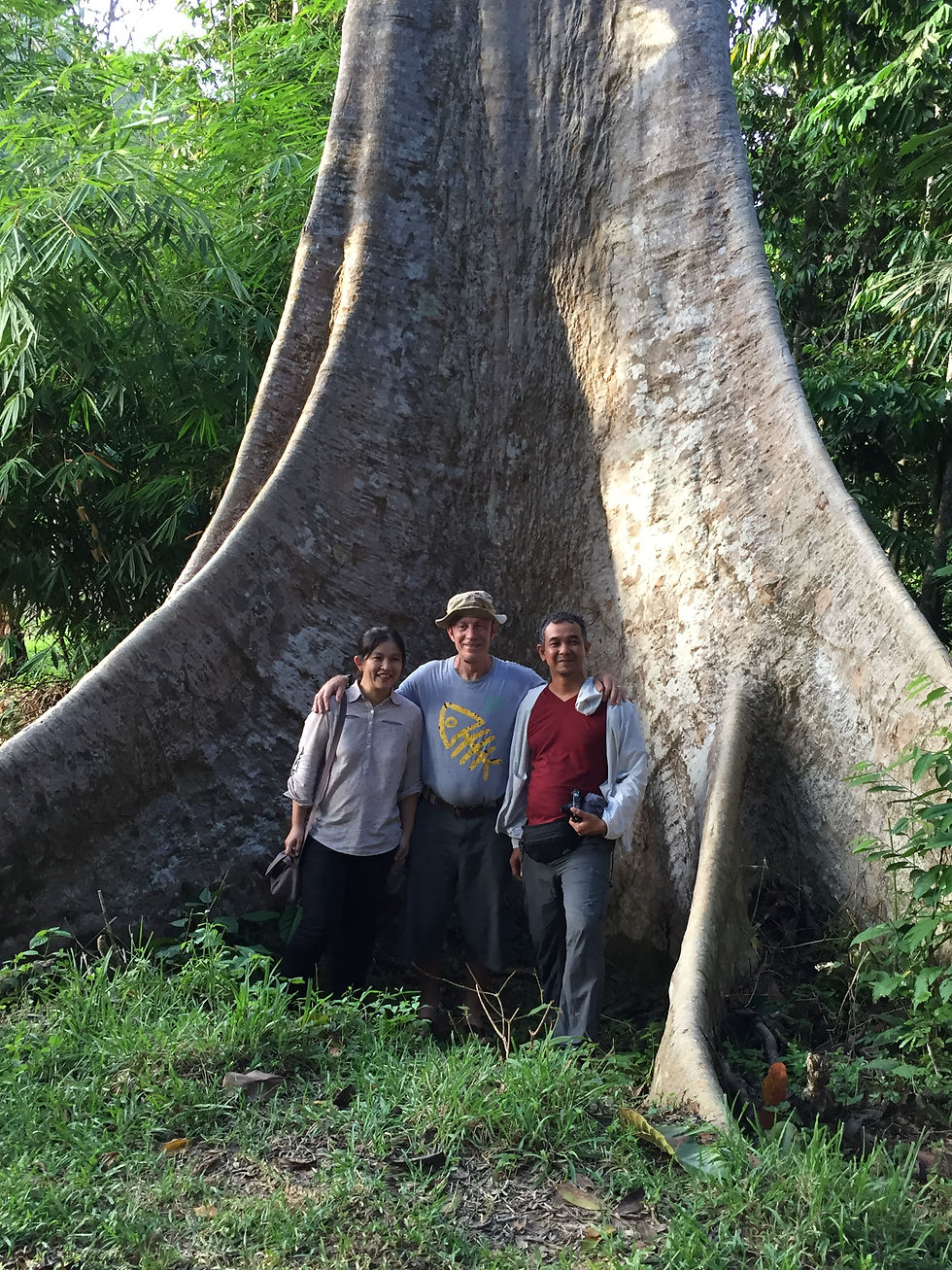
Taman Negara, Pahang.
The article is published by The Edge on 2 September 2026 https://theedgemalaysia.com/node/816539


Comments